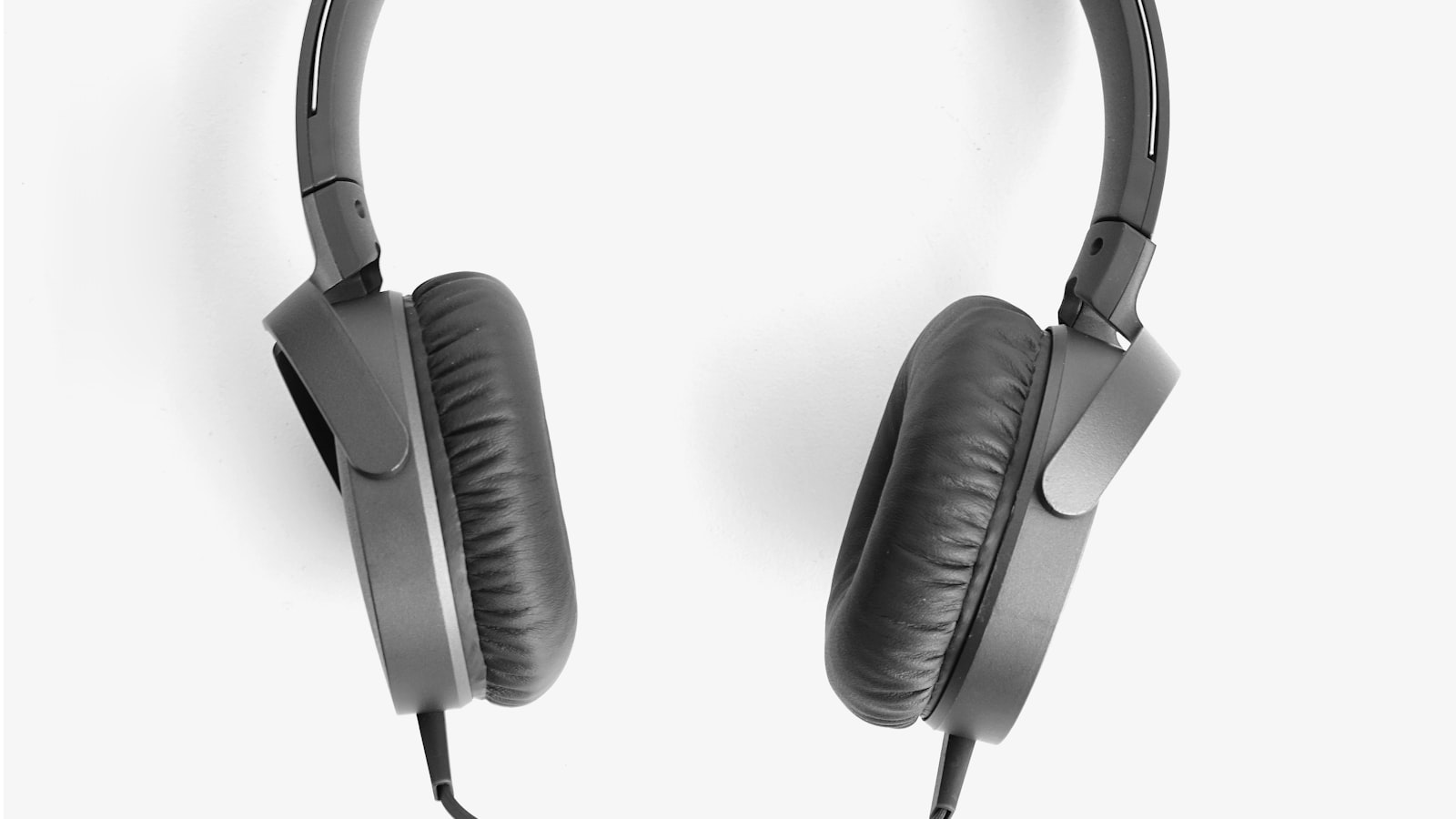
Few questions land in my inbox more often than this one: do I actually need a headphone amp? The honest answer is that it depends entirely on the headphones you own and the source you plug them into. Some of the best headphones I've tested sound anemic and lifeless straight out of a laptop, then transform completely with the right box in the chain, while others need nothing more than the phone already in your pocket.
What a Headphone Amp Actually Does#
An amplifier's core job is unglamorous: it takes the low-level signal coming out of a source (a DAC, a phone, a laptop) and boosts it to a level that can physically move the drivers in your headphones. Every device that outputs sound already has some amplification built in. The question is never "amp or no amp," but rather whether the amp you already have is good enough for the load you're asking it to drive.
A good dedicated amp does three things a weak built-in amp struggles with:
- Delivers enough voltage to reach satisfying listening levels without running out of headroom.
- Supplies enough current so the drivers stay under control during complex, demanding passages.
- Keeps its own noise and distortion low so it doesn't smear the signal it's boosting.
That middle point is the one most people overlook. Volume is easy to hear and easy to fix. Control is subtler, and it's usually where a struggling source gives itself away.
Volume Is the Least Interesting Part#
If all you notice is that your headphones don't get loud enough, an amp will obviously help. But volume is the crudest measure of whether you're being underserved. I've heard plenty of setups that reach ear-splitting levels while still sounding flat, congested, and slightly out of breath.
The signs that go beyond loudness#
When a headphone isn't getting the power it wants, the symptoms tend to show up like this:
- Soft, wooly bass that lacks definition and seems to arrive a beat late.
- A flattened sense of dynamics, where quiet-to-loud swings feel compressed rather than startling.
- Congestion in busy passages — a full orchestra or a dense mix turns into a blur.
- A collapsed soundstage, with instruments piling up in the middle instead of spreading out.
Add a capable amp and those same headphones can suddenly breathe: bass tightens, transients snap, and the music feels like it has room to move. That's the transformation people are really chasing, even when they describe it as "not loud enough."
When You Genuinely Need One#
Here's where the practical guidance lives. Certain headphones are demanding by design, and a dedicated amp stops being a luxury.
High-impedance dynamic headphones#
Many classic open-back models are built around high-impedance drivers, often in the 250 to 600 ohm range. These want voltage more than anything, and phones or cheap dongles simply can't swing enough of it. Plug a 300-ohm headphone into a laptop jack and you'll often get thin, quiet, unconvincing sound. Give it a proper amp and it comes alive.
Power-hungry planar magnetics#
Planar magnetic headphones are a different animal. Their impedance is frequently low, which fools people into thinking any source will do, but many planars are also quite insensitive and crave current. A source can measure fine on paper and still sound soft and uncontrolled because it can't push enough current into the load. This is the category where I most often see listeners underestimate their needs.
Insensitive headphones in general#
Sensitivity — usually quoted in decibels per milliwatt or per volt — tells you how loud a headphone gets for a given input. Low-sensitivity designs, regardless of type, are the ones that benefit most from extra amplification. If a spec sheet lists something in the low-to-mid 90s dB/mW or below, take it as a hint that a stronger source is worth auditioning.
When You Can Comfortably Skip One#
Just as important is knowing when an amp is a waste of money.
- Most in-ear monitors (IEMs). These are typically high-sensitivity and easy to drive. A good phone dongle or a modest portable DAC is usually all they'll ever need. Pushing a big desktop amp into a sensitive IEM often does more harm than good, introducing audible hiss.
- True wireless earbuds and Bluetooth headphones. The amplifier is inside the earpiece, fed by the internal DAC. An external amp isn't even part of the signal path.
- Efficient consumer over-ears. Plenty of well-regarded closed-back headphones are voiced specifically to sound good from phones and laptops. They're designed around real-world sources, and they deliver.
If your headphones already sound dynamic, controlled, and effortless from your current source, adding an amp will not make them meaningfully better. Save the money.
How to Check Before You Buy#
You don't need lab gear to make a smart decision. Two numbers on the spec sheet do most of the work.
Impedance#
Impedance (in ohms) is a rough proxy for how much voltage a headphone wants. As a general rule:
- Under ~32 ohms: usually easy to drive from portable sources.
- ~32 to 100 ohms: a middle ground; often fine, occasionally helped by more power.
- Over ~100 ohms: increasingly likely to want a dedicated amp.
Impedance alone isn't the whole story — it's the pairing with sensitivity that matters — but it's a fast first filter.
Sensitivity#
Sensitivity tells you how efficiently a headphone converts power into volume. Higher numbers mean easier to drive. The catch is that manufacturers quote it inconsistently — some use dB/mW, others dB/V — so comparing two headphones can be genuinely confusing. When in doubt, look for how reviewers describe drivability with common sources rather than fixating on the raw figure.
The listening test that beats any spec#
Specs point you in a direction, but ears settle it. If you can, audition your headphones from a properly powered source and from your everyday device back to back. Listen for the control cues, not the volume: does the bass tighten? Do dense passages untangle? Does the sound open up? If nothing changes, you have your answer, and it's a happy one for your wallet.
Don't Forget the DAC Question#
Amps and DACs get bundled together constantly, and it muddies the water. A DAC converts the digital file into an analog signal; an amp boosts that analog signal to drive your headphones. They're separate jobs, even when they live in the same chassis.
For most people, a combined DAC/amp unit is the sensible, tidy choice — one box, one cable, done. Separates make sense mainly when you want to upgrade one stage independently or you're chasing a specific pairing. But understand that if your problem is drive, it's the amp stage doing the heavy lifting, not the DAC. Swapping DACs rarely fixes a headphone that's starved for power.
A Realistic Word on Diminishing Returns#
I'll be candid: amplification is one of the areas where audio spending runs into a wall fastest. Getting a demanding headphone from "underpowered" to "properly driven" is a genuine, obvious upgrade. Going from "properly driven" to "driven by something twice the price" is usually a matter of taste and marginal refinement, not a night-and-day leap.
My advice is to match the amp to the load, not to your ego. Buy enough clean power to control your hardest-to-drive headphone with headroom to spare, then stop. The money left over is better spent on the headphones themselves, better recordings, or a quieter room — all of which move the needle more than another amp upgrade ever will.
The Bottom Line#
Headphone amps matter, but not universally. They earn their place when you own high-impedance or insensitive headphones that a phone can't wrangle, and their real gift is control and dynamics rather than sheer volume. If you live with efficient IEMs, wireless gear, or headphones voiced for everyday devices, you can skip the amp with a clear conscience. Check impedance and sensitivity, trust a back-to-back listen over any single number, and spend where it actually changes what you hear.